How does Bone Density affect the Timeline of a Dental Implant Procedure?
When it comes to dental implants, one of the most critical factors influencing success is something you probably don’t think about often: your bone density. It’s easy to focus on the visible aspects of a smile straight teeth, bright enamel but what’s happening beneath the surface plays an equally vital role. Today, let’s dive into how bone density affects the timeline of a dental implant procedure. Whether you're considering implants or just curious about the process, this guide will help you understand why your jawbone is the unsung hero of your smile.
1. Understanding Bone Density: The Foundation of a Successful Dental Implant
Let’s start with the basics. Bone density refers to how strong and thick your bones are, including the jawbone that supports your teeth. Think of it like the foundation of a house. Without a solid base, even the most beautifully constructed structure won’t stand for long. Similarly, dental implants which act as artificial tooth roots need strong, stable bone to anchor them securely.
The jawbone has a unique property: it needs stimulation (like chewing) to maintain its density and strength. When a tooth is lost, that area of the jaw no longer receives stimulation, leading to gradual bone loss over time. That’s why addressing missing teeth promptly can make all the difference in preserving bone health.
2. Why Bone Density Matters in Your Dental Implant Journey
You might be wondering, “Why does bone density affect my dental implant timeline? Isn’t it just about placing the dental implant?” Not quite! The strength and thickness of your jawbone determine whether it can support an implant immediately or if additional steps like bone grafting are needed beforehand.
For example:
- High bone density: If your jawbone is healthy and dense, we can often move straight to placing the dental implant during implant surgery.
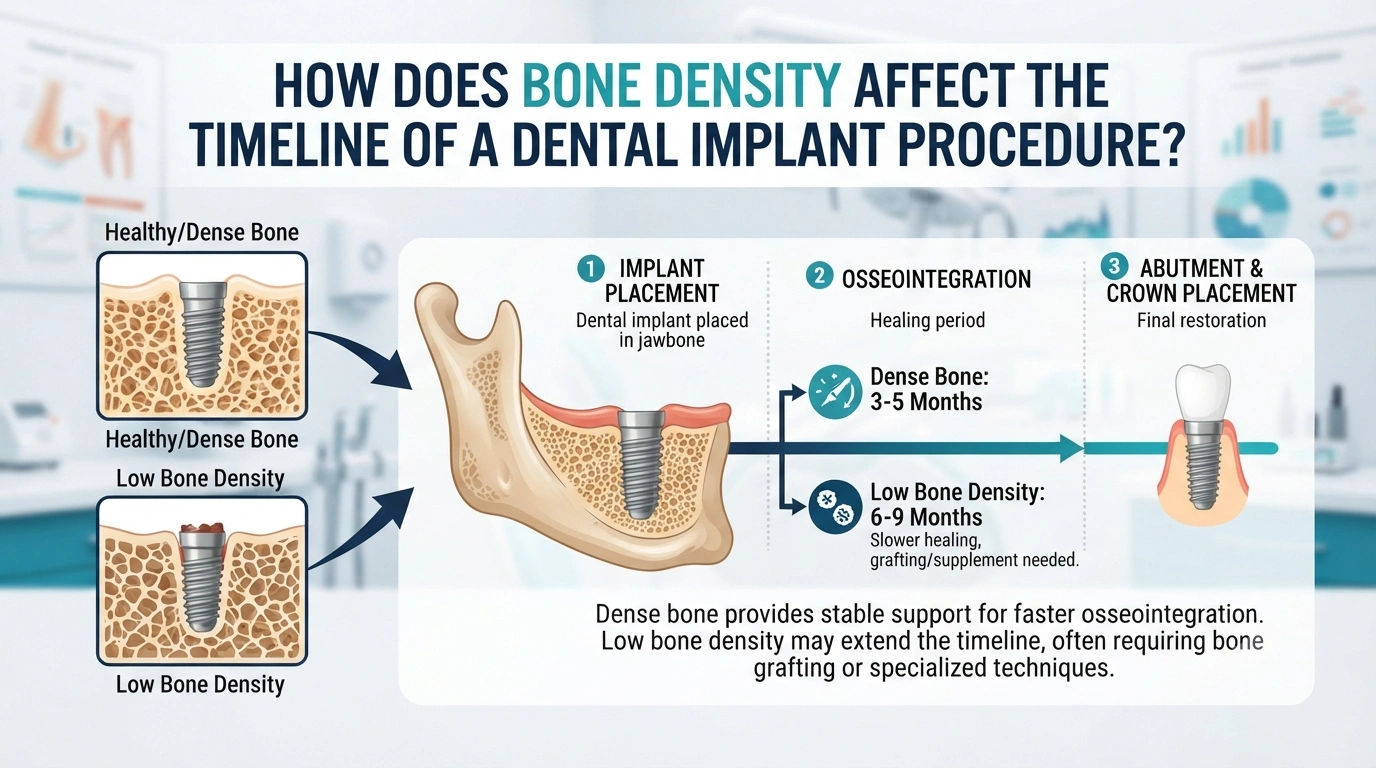
- Low bone density: If significant bone loss has occurred, we may need to rebuild or strengthen the area with a procedure like bone grafting before placing the implant. This adds time to your overall treatment plan.
One patient I worked with at AMD Dental Clinic had lost several teeth years ago and assumed she couldn’t get implants because her jawbone felt “too weak.” After evaluating her case and performing a successful bone graft, we were able to proceed with her implants and she couldn’t stop smiling after seeing her results!
3. How Does Bone Density Impact Healing Time After Implant Surgery?
Here’s something important to keep in mind: dental implants don’t just sit passively in your jawbone they integrate with it through a process called osseointegration. Essentially, this means that the titanium implant fuses with your natural bone over time, creating a sturdy foundation for your new tooth.
Now, healing time after surgery depends largely on how healthy your bone is:
- Dense bone tends to heal more predictably because it provides immediate stability for the implant.
- Weaker or thinner bone may take longer to fully integrate with the implant, as it needs extra time to adapt and strengthen around the site.
This variation explains why timelines for dental implants can range from a few months to over a year for more complex cases.
4. Assessing Your Bone Density: What to Expect During Your Consultation
If you’re considering dental implants at AMD Dental Clinic, one of our first steps will be assessing your bone density during your initial consultation. Don’t worry it’s completely painless! Here’s what typically happens:
- Medical history review: We’ll ask about any past conditions or treatments that could impact your bone health.
- Physical examination: I’ll examine your mouth and take note of any areas where missing teeth may have affected your jawbone.
- Imaging tests: Advanced imaging technology (like CBCT scans) allows us to get detailed 3D views of your jawbone structure and density.
This thorough evaluation helps us create a personalized treatment plan tailored specifically to you.
5. The Role of Imaging Technology in Evaluating Bone Density for Implants
Imaging technology has completely transformed how we approach dental implants. At AMD Dental Clinic, we use state-of-the-art tools like cone-beam computed tomography (CBCT) scans to evaluate not just whether you have enough bone but also its exact shape, size, and quality.
Think of CBCT scans as a map for your dental journey they allow us to pinpoint exactly where an implant should go while avoiding sensitive areas like nerves or sinuses. One patient told me after her scan, “It’s amazing how much detail you can see! No wonder everything feels so precise.”
With these tools at our disposal, we’re able to offer safer procedures and better outcomes even for patients who initially thought they weren’t candidates for implants.
6. Common Myths About Bone Density and Dental Implants: Debunked!
Let’s clear up some common misconceptions:
Myth 1: “If I’ve lost too much bone, I can’t get implants.”
Truth: While severe bone loss can complicate things, procedures like bone grafting or sinus lifts can restore enough density for successful implantation.Myth 2: “Bone grafting is painful and risky.”
Truth: Modern techniques make grafting minimally invasive with quick recovery times and it dramatically improves outcomes.Myth 3: “Dental implants always fail in people with low bone density.”
Truth: With proper planning and advanced technology (like we use at AMD Dental Clinic), even patients with compromised bone can achieve excellent results.
7. Can You Still Get Implants with Low Bone Density? Exploring Your Options
Absolutely! If you’ve been told you have low bone density or significant jawbone loss, don’t lose hope there are options:
- Bone grafting: This involves adding material (often natural or synthetic bone) to areas where density is lacking.
- Sinus lift: For upper molars near the sinus cavity, this procedure creates space for new bone.
- Mini implants: These smaller-sized implants require less bone than traditional ones.
- Zygomatic implants: These specialized implants anchor into the cheekbone rather than relying solely on the jawbone.
At AMD Dental Clinic, we pride ourselves on offering solutions tailored to each individual’s needs no cookie-cutter approaches here!
8. Preparing for Your Implant Procedure: Boosting Bone Health Beforehand
Did you know there are steps you can take right now to improve your bone health? Here are some tips:
- Eat calcium-rich foods like dairy products, leafy greens, and almonds.
- Get enough vitamin D, which helps your body absorb calcium effectively.
- Avoid smoking, as it negatively impacts both healing and overall oral health.
- Consider supplements if recommended by your doctor or dentist.
By prioritizing these habits before surgery, you’re giving yourself the best chance at a smooth recovery and long-term success.
9. The Timeline of a Dental Implant Procedure: How Bone Density Fits In
Here’s how it typically works:
- Consultation & imaging: We assess your mouth and develop a plan based on your specific needs.
- Pre-implant procedures (if necessary): Bone grafting or sinus lifts may be performed first if needed.
- Implant surgery: The titanium post is inserted into your jawbone.
- Healing & osseointegration: This phase takes several months as your dental implant fuses with the surrounding bone.
- Crown placement: Once healed, we place a custom crown atop the implant for a natural look and feel.
For patients with high-density bone, steps 2-4 may be quicker but even complex cases are worth the wait when done properly!
10. Post-Procedure Care: Supporting Bone Health for Long-Term Success
After getting dental implants, maintaining strong bones becomes even more important! Here’s how you can support long-term success:
- Stick to regular check-ups at AMD Dental Clinic we’ll monitor both your implant and surrounding tissues.
- Maintain excellent oral hygiene (yes, flossing matters!).
- Eat nutrient-rich foods that promote overall health including calcium and protein-rich options.
- Avoid habits like smoking that could compromise healing or weaken bones over time.
Remember a successful implant isn’t just about placement; it’s about ongoing care!
When should you see a dentist? If you’ve been living with missing teeth or suspect you might have low bone density due to prolonged tooth loss or simply want expert advice on whether dental implants are right for you it’s time to schedule a consultation at AMD Dental Clinic!
In conclusion, while bone density plays an essential role in determining the timeline for dental implants, modern techniques mean there’s almost always a solution even for patients facing challenges like low-density bones or extensive loss. At AMD Dental Clinic, we’re committed to guiding you every step of the way toward restoring not just function but confidence in your smile.
Ready to explore whether dental implants are right for you? Reach out today we’d love to help!
- A-3, Natraj Nagar near Imli Phatak, Jaipur-302015
- +91 9945826926
- contact@amddentalclinic.com
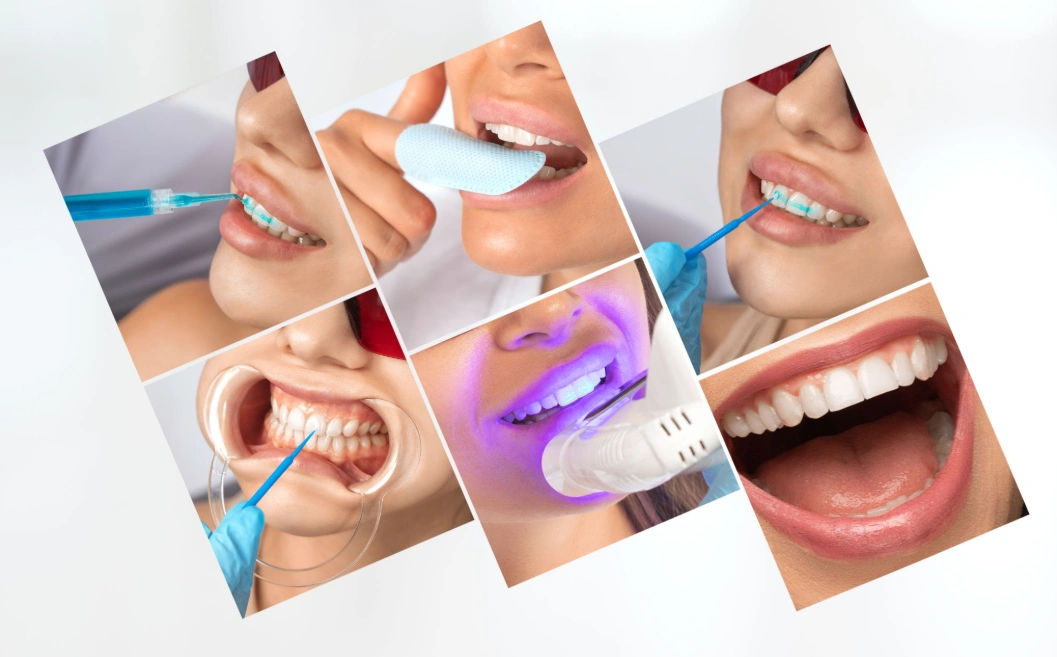
Yellow Teeth Before Wedding? 5 Safe Ways to Brighten Your Smile
Yellow teeth before your big day? Discover 5 safe, effective tips to brighten your smile at AMD Dental Clinic. Read now for expert advice from Dr. Mili Gupta!
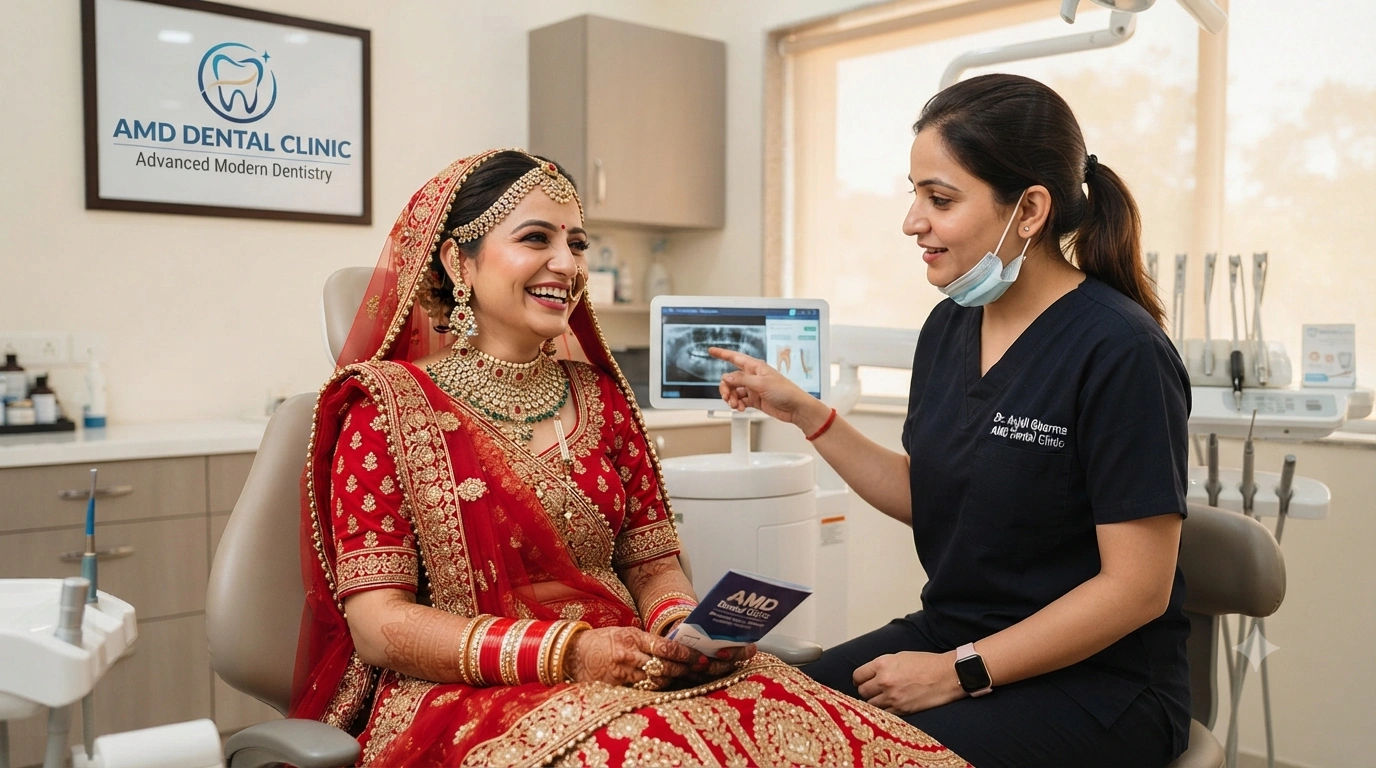
How Early Should a Bride Start Her Dental Treatment Before the Wedding?
Discover the perfect timeline for bridal dental care! Dr. Mili Gupta at AMD Dental Clinic shares expert tips to help brides shine bright on their big day.
Failed Root Canal Symptoms: When Do You Need an RCT Re-Treatment in Jaipur?
Discover symptoms of failed root canals and when RCT re-treatment is needed in Jaipur. Visit AMD Dental Clinic for expert care by Dr. Mili Gupta today!