Peri-Implant Mucositis vs Peri-Implantitis: What's the Difference?
Dental implants are a life-changing solution for people who’ve lost one or more teeth. They restore not just your smile but also your confidence, ability to chew, and overall oral health. But like anything else in our bodies, implants require proper care and attention to stay healthy. If you’ve ever heard terms like peri-implant mucositis or peri-implantitis, you might be wondering what they mean and whether they’re something you should worry about.
These two conditions can affect the health of your dental implants, and understanding the difference between them is key to protecting your investment in your smile. So, let’s dive into this important topic together!
1. Understanding Dental Implants: The Basics You Need to Know
Before we get into peri-implant mucositis and peri-implantitis, let’s take a moment to understand what dental implants are and why they’re so amazing.
A dental implant is essentially a small titanium post that acts as an artificial tooth root. It’s surgically placed into your jawbone, where it fuses with the bone over time (a process called osseointegration). Once the implant is secure, it can support a crown, bridge, or even a full denture.
Here at AMD Dental Clinic in Jaipur, we specialize in dental implant care and often see patients who are thrilled with how natural their implants look and feel. However, while implants are incredibly durable, they’re not invincible they require proper care just like natural teeth do.
Now that we’ve covered the basics, let’s move on to the conditions that can affect the soft tissues around your dental implant.
2. What is Peri-Implant Mucositis? Symptoms and Causes Explained
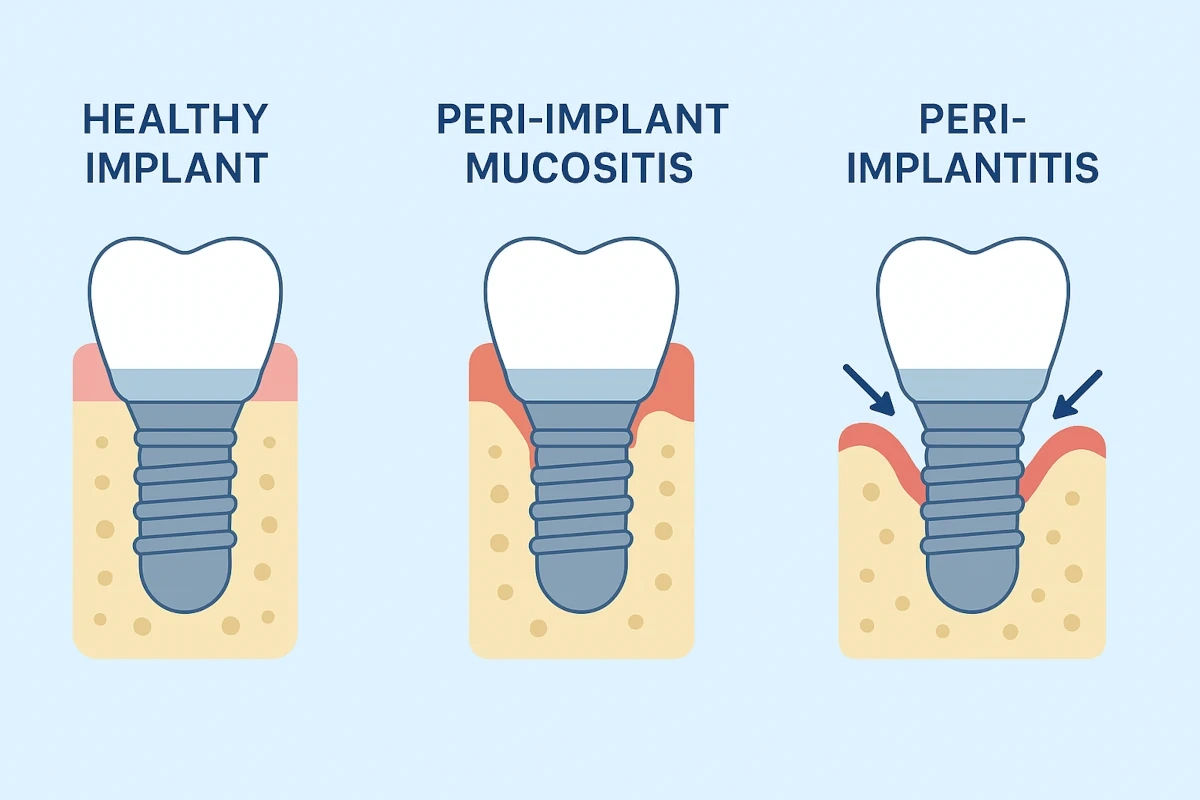
Think of peri-implant mucositis as the “early warning sign” for potential implant problems. It’s an inflammatory condition that affects the soft tissues (gums) surrounding a dental implant. The good news? Mucositis is reversible if caught early and treated properly.
Symptoms of Peri-Implant Mucositis
The symptoms can be subtle at first but may include:
- Redness or swelling in the gums around the dental implant
- Bleeding when brushing or flossing near the implant
- Mild discomfort or tenderness
If you’re noticing any of these signs, don’t ignore them! As I often tell my patients: “Your gums are like windows into your oral health if they’re red or inflamed, it’s time to pay attention.”
Causes of Peri-Implant Mucositis
Mucositis is usually caused by plaque buildup around the dental implant. Plaque contains bacteria that irritate the gums, leading to inflammation. Other contributing factors include poor oral hygiene, smoking, uncontrolled diabetes, or even ill-fitting prosthetics.
One patient of mine a young man in his 30s came in with swollen gums around his implant just six months after placement. It turned out he was skipping flossing because he thought implants didn’t need as much care as natural teeth (a common misconception). With some professional cleaning and guidance on proper home care, we were able to reverse his mucositis completely.
3. Diving Deeper: The Definition of Peri-Implantitis
If peri-implant mucositis is the “early warning,” then peri-implantitis is what happens when that warning goes unheeded. Peri-implantitis is a more advanced condition where inflammation extends beyond the gums and starts affecting the bone that supports the implant.
Symptoms of Peri-Implantitis
The symptoms are similar to mucositis but more severe:
- Persistent gum swelling and redness
- Pain or discomfort around the implant
- Bleeding or pus discharge from the gums
- Gum recession exposing part of the implant
- Loose implants due to bone loss
Peri-implantitis can lead to significant bone damage if left untreated and in worst-case scenarios, it can cause implant failure.
4. How Do Mucositis and Implantitis Differ? A Clear Breakdown
Let’s simplify things with a quick comparison:
| Feature | Peri-Implant Mucositis | Peri-Implantitis |
|---|---|---|
| Affected Area | Gums only | Gums + underlying bone |
| Severity | Mild inflammation | Advanced inflammation |
| Reversible? | Yes | No (but manageable) |
| Bone Loss | No | Yes |
In short: mucositis is an early stage condition that can be reversed with prompt treatment, while peri-implantitis involves irreversible bone damage that requires more intensive management.
5. Risk Factors: Who’s More Likely to Develop These Conditions?
Some people are more prone to developing peri-implant diseases than others. Here are some common risk factors:
- Poor Oral Hygiene: If you’re not brushing twice a day and flossing daily (yes, even around implants!), plaque buildup becomes inevitable.
- Smoking: Tobacco use reduces blood flow to the gums and impairs healing.
- Diabetes: Uncontrolled diabetes increases susceptibility to infections.
- History of Gum Disease: If you’ve had periodontal disease before getting implants, you’re at higher risk for peri-implant issues.
- Stress on Implants: Overloading implants with excessive biting forces (due to teeth grinding or misaligned prosthetics) can also contribute.
6. Common Symptoms: How to Recognize Mucositis vs. Implantitis
So how do you know if there’s trouble brewing around your implant? Pay attention to these warning signs:
- Bleeding gums when brushing or flossing
- Swelling or redness around the implant site
- Pain or tenderness near the implant
- Bad breath or an unpleasant taste in your mouth
- Loose-feeling implant restoration
If you notice any of these symptoms no matter how minor schedule an appointment right away! Early detection makes all the difference.
7. The Importance of Early Detection: Why Ignoring Symptoms Can Be Costly
I can’t stress this enough: ignoring gum inflammation around your implants is like ignoring a leaky faucet it might not seem like a big deal now, but it could lead to serious damage down the road.
One patient I treated waited months before coming in with bleeding gums around her implant. By then, she had already lost some bone support and required surgery to stabilize her implant a situation that could have been avoided with earlier intervention.
8. Treatment Options: Managing Peri-Implant Mucositis and Peri-Implantitis
For Peri-Implant Mucositis:
Treatment focuses on eliminating plaque and controlling inflammation:
- Professional cleaning at our clinic
- Improved oral hygiene practices at home
- Antibacterial rinses or gels
For Peri-Implantitis:
Management depends on severity but may include:
- Deep cleaning (scaling) around the implant
- Antibiotics for infection control
- Surgery for bone grafting if significant bone loss has occurred
9. Debunking Myths: Common Misconceptions About Implant Health
Let me clear up two big myths I hear often:
- “Dental implants don’t need as much care as real teeth.” False! Implants require just as much attention if not more to prevent complications.
- “Once I get an implant, it’ll last forever.” While implants are long-lasting, their success depends on how well you care for them.
10. Preventative Measures: How to Keep Your Implants and Gums Healthy
The best way to avoid peri-implant diseases is prevention! Here are my top tips:
- Brush twice daily with a soft-bristle toothbrush.
- Floss carefully around your implants using specialized floss or interdental brushes.
- Visit us at AMD Dental Clinic every six months for professional cleanings.
- Quit smoking it’s one of the biggest threats to peri-implant health.
- Manage underlying conditions like diabetes through regular medical check-ups.
When should you see a dentist? If you notice even mild symptoms like bleeding gums or bad breath near your implant or if it’s been a while since your last check-up don’t wait! At AMD Dental Clinic, we’re here to help keep your smile healthy for years to come.
Taking care of your dental implants doesn’t have to be complicated with routine maintenance and prompt action when issues arise, you can enjoy all the benefits they bring without worry!
Ready for an evaluation or just want personalized advice? Book an appointment today we’d love to see you!
- A-3, Natraj Nagar near Imli Phatak, Jaipur-302015
- +91 9945826926
- contact@amddentalclinic.com
Are Electric Toothbrushes Good for Your Teeth? | AMD Dental
Are electric toothbrushes good for your teeth? Learn about electric toothbrush benefits, plaque removal, gum health, brushing pressure, and how to choose the right one.
Pain Relief After Root Canal: What Is Normal and What Is Not?
Discover what to expect after a root canal, including normal pain vs. warning signs. Read Dr. Mili Gupta's expert tips at AMD Dental Clinic for relief!

How does bone density affect the timeline of a dental implant procedure?
Discover how bone density impacts dental implant timelines. Learn expert insights from Dr. Mili Gupta at AMD Dental Clinic. Read now for informed choices!