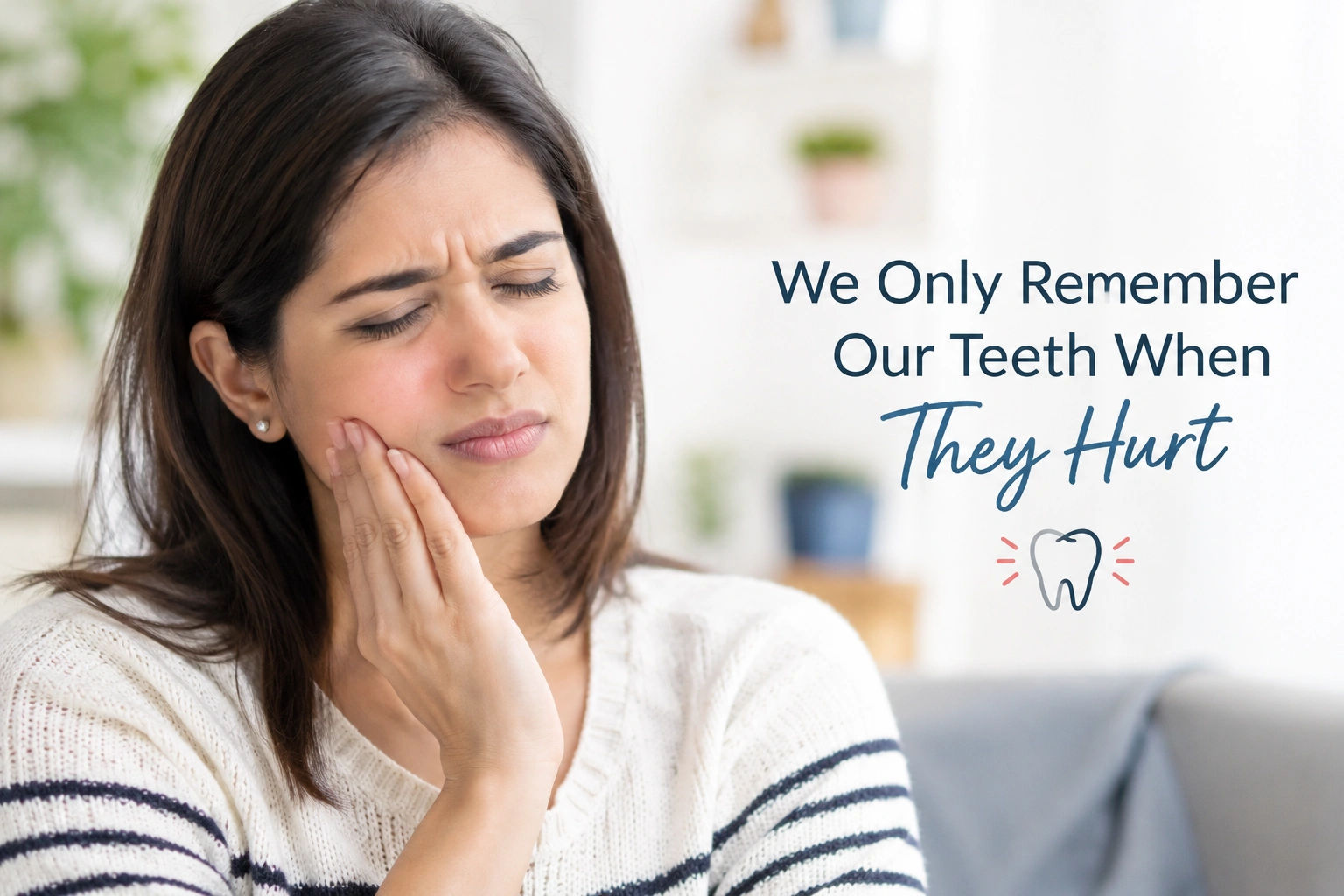
We Only Remember Our Teeth When They Hurt
By - Dr. Mili Gupta (Director, AMD Dental Clinic)
Be honest: when did you last visit a dentist when nothing was hurting?
As a dentist, I ask my patients this question all the time, and the answer is almost always "never" or "I can't remember." We brush every morning, maybe at night too, glance at our smile in the mirror, and consider the job done. A little blood on the toothbrush? Normal. A tooth that stings with cold water? We'll just skip the ice cream for a while. And when the pain finally becomes impossible to ignore, out comes the clove oil, a painkiller, and the familiar promise to "get it checked if it doesn't go away."
It usually goes away. And so do we, until the next time.
And this isn't just something I see in my own clinic. Problems like tooth decay, gum disease and tooth loss affect around 3.5 billion people, nearly half the world, making them more common than the next five most widespread lifestyle diseases put together. Untreated tooth decay alone troubles some 2.5 billion people. Yet most of us still think of our teeth as a matter of looks, not health.
Why We Wait for the Pain
Somewhere along the way, we decided that the dentist is a place you go when something is wrong, not a place you go to keep things right. We get our blood pressure checked, we track our steps, some of us even get yearly health check-ups. But the mouth rarely makes it onto that list.
In my experience, part of it is fear of the drill, part of it is busy schedules, and a big part is the quiet belief that if nothing hurts, nothing is wrong. It turns out this thinking is incredibly common. In one study from Shimla, nearly two out of three people said there was simply no need to see a dentist unless they were in pain. In another, among patients at a city dental hospital, almost half hadn't visited a dentist in more than two years, and very few had ever come in just for a check-up.
What I wish more people knew is that teeth and gums are patient. They can be in trouble for a long time before they start to complain, and by the time they do, the simple fix is often no longer an option.
Small Problems Don't Stay Small
Many of the root canal treatment, I do began as a tiny cavity that could have been filled in fifteen minutes. Left alone, it slowly works its way deeper until it reaches the nerve, and suddenly we are talking about a root canal treatment instead of a simple filling. Gums that bleed a little while brushing are often an early warning of gum disease, which, left alone, loosens the bone that holds teeth in place.
This is also why so many of us accept losing teeth as just a part of growing old. Patients often tell me, "It's age, what can you do?" We see it in our grandparents and assume it is natural. But it is far more about years of quiet neglect than about age itself. In one village survey in Haryana, around two-thirds of adults in their late thirties and early forties already had gum disease, and among those over 65, the number climbed past 90 percent. Most of that damage built up silently, one ignored sign at a time.
Your Mouth Is Talking About the Rest of You
We tend to think of the mouth as its own little world, separate from the rest of the body. It isn't.
Gum health and blood sugar, for instance, seem to feed into each other. People with diabetes are noticeably more likely to develop severe gum disease, around 40 percent more likely in one large study, and ongoing gum infection can in turn make blood sugar harder to control. Researchers have also found that people with gum disease are more likely to have heart problems. Scientists are still working out exactly how strong that connection is and whether one directly causes the other, but the pattern keeps showing up.
This is why I often ask patients with stubborn gum problems about their blood sugar, and why I'd encourage anyone with diabetes to tell their dentist. Those bleeding gums may be telling you something about more than just your teeth.
The Bill Nobody Plans For
Then there is the moment every postponed problem eventually arrives at: the bill.
One of the most common questions I'm asked after explaining a treatment is whether insurance will cover it. Usually, I have to say no. Most standard policies in India treat routine dental care, such as fillings, cleanings, and scaling, as outpatient treatment and exclude it. Research across India suggests fewer than one in seven people have any meaningful cover for dental costs, and nearly one in five end up facing payments large enough to strain the household budget.
So we delay again, hoping it can wait. And the longer it waits, the more expensive it becomes.
The Everyday Habits Behind It
None of this happens in isolation. It is shaped by the small things we do every day without thinking twice: the paan after dinner, the gutka or cigarette during a work break, the third cup of sugary chai, and, with the festive season around the corner, plates full of mithai.
Sugar, tobacco and alcohol are among the biggest drivers of oral disease worldwide, and India sees one of the highest rates of oral cancer in the world, closely tied to tobacco use. As a dentist, I'm not asking anyone to give up every sweet or celebration. It is about knowing what our daily habits are quietly adding up to.
The Good News: Most of This Is Preventable
Here is the part I most want you to take away. Almost everything above can be prevented or caught early. Brushing properly, cleaning between teeth, cutting back on sugar and tobacco, and seeing a dentist once or twice a year, even when nothing hurts, can save not just teeth, but money, time and a lot of pain.
Your teeth are not just about your smile. They are part of your health, and they deserve the same attention you give the rest of your body.
So let's go back to where we started. When did you last visit a dentist when nothing was hurting? If you can't remember, consider this a gentle nudge from a dentist: book that check-up.
In our next piece, we'll look at the simple lifestyle habits that can keep your teeth and gums healthy for life.
- A-3, Natraj Nagar near Imli Phatak, Jaipur-302015
- +91 9945826926
- contact@amddentalclinic.com
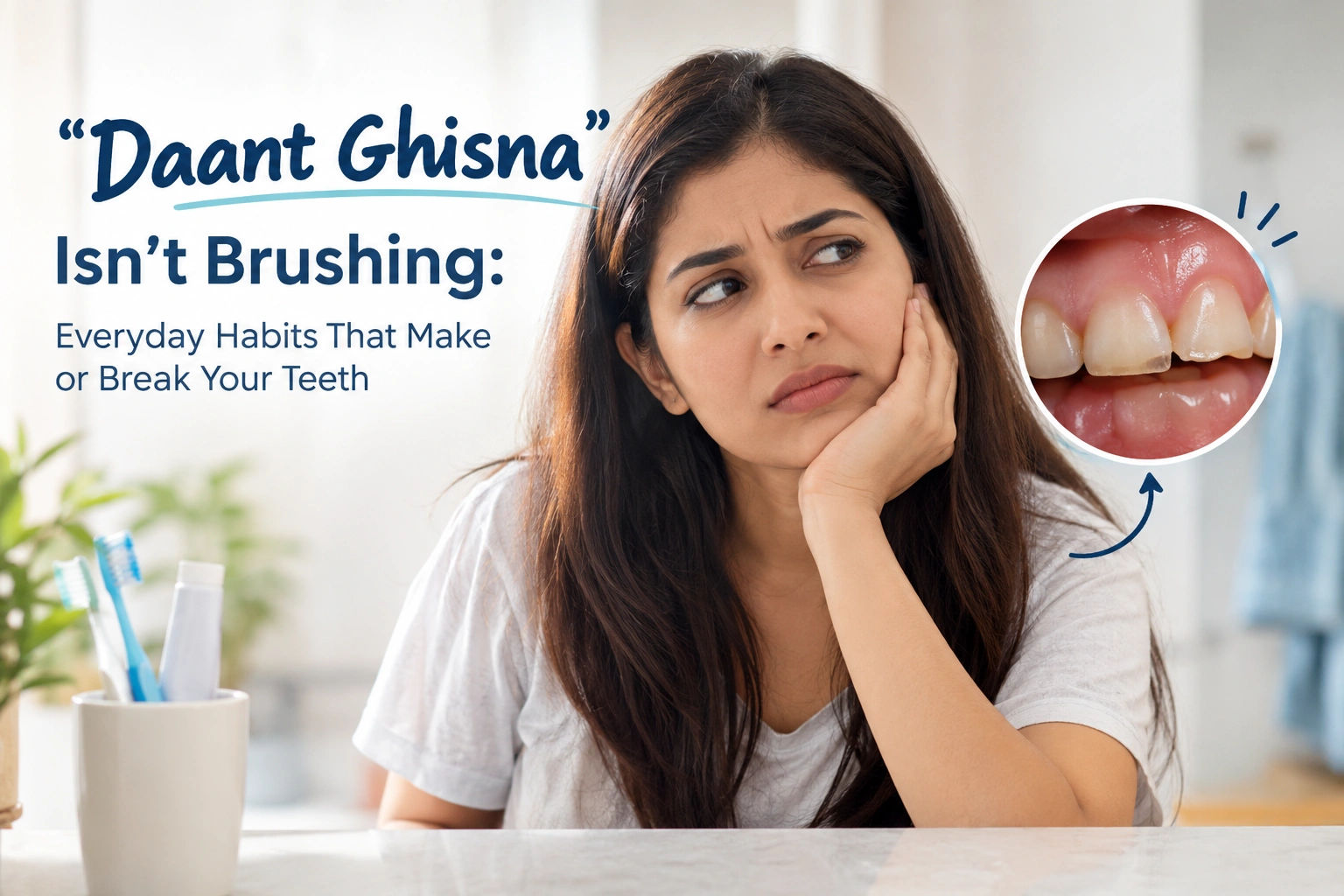
Everyday Habits That Make or Break Your Teeth
Discover how common habits like "daant ghisna" impact your dental health. Learn tips to protect your smile from AMD Dental Clinic. Read now for healthy teeth!

Bridal Smile Makeover Without Braces: What Are Your Options?
Discover bridal smile makeover options without braces! At AMD Dental Clinic, Dr. Mili Gupta shares tips for a radiant wedding-ready smile. Learn more today!
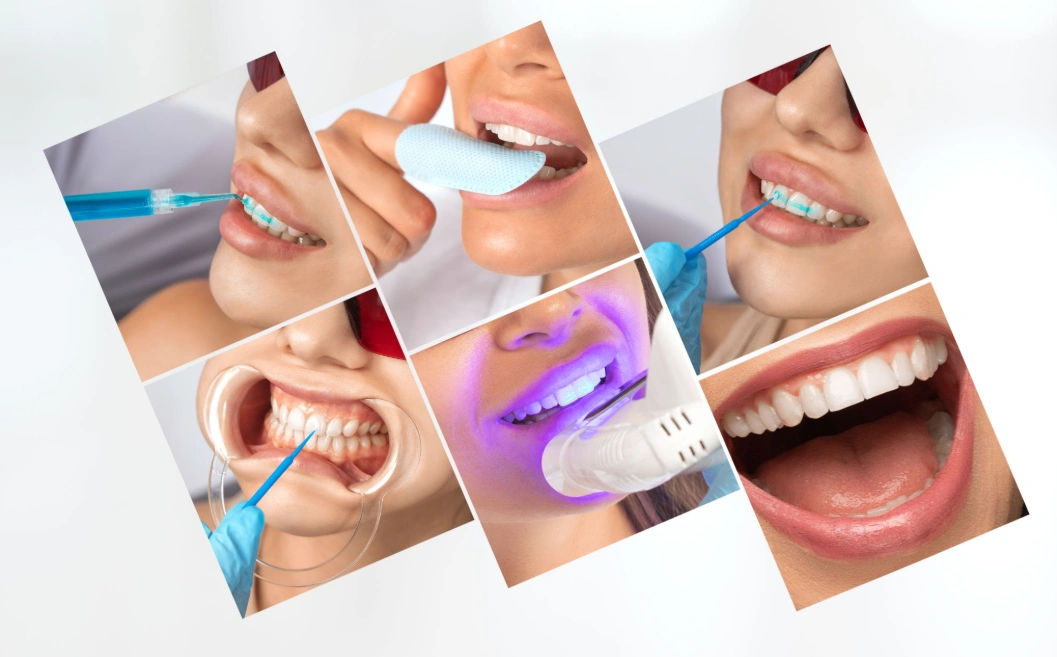
Yellow Teeth Before Wedding? 5 Safe Ways to Brighten Your Smile
Yellow teeth before your big day? Discover 5 safe, effective tips to brighten your smile at AMD Dental Clinic. Read now for expert advice from Dr. Mili Gupta!